




I’m going to say something that sounds completely backward:
One of the most common nutrition mistakes women make during menopause is eating too much fruit.
You’ve done the “right” things. You swapped cookies for berries, ice cream for smoothie bowls, and chips for apple slices. You’re doing everything the wellness world told you to do. And now I’m telling you this “healthy” fruit habit might be working against your hormone balance?
Let me explain—because this is not about demonizing fruit. It’s about understanding how your changing hormones respond to sugar, including the natural sugar in fruit, and why this matters so much during perimenopause and menopause.
The “Healthy” Menopause Habit That Backfires
Meet Maria, one of our customers. She came to me frustrated and confused. In 18 months, she’d gained 15 pounds—most of it around her middle—despite being, as she put it, “so good” with her diet.
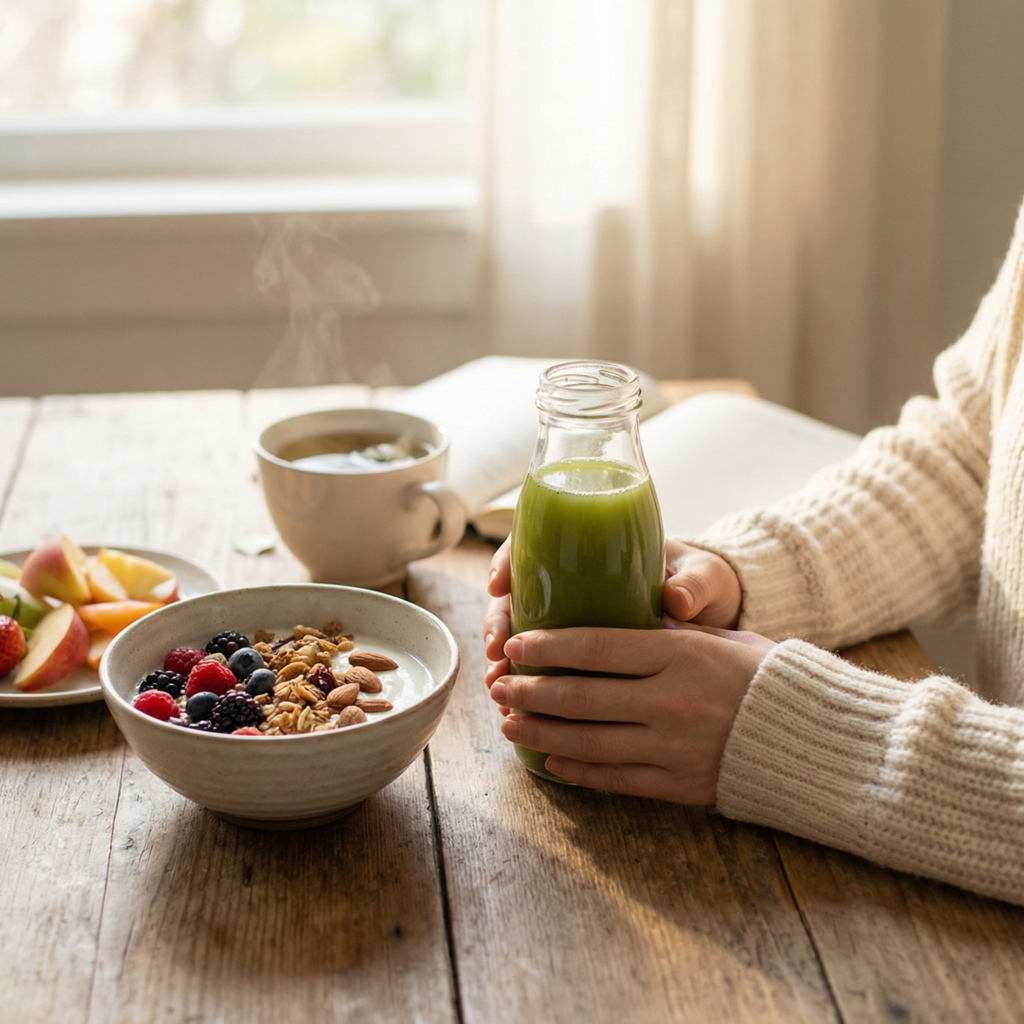
Here’s a typical day for her:
- Breakfast: Big smoothie bowl (banana, mango, berries, granola)
- Snack: Apple with almond butter
- Lunch: Salad with grilled chicken and orange slices
- Snack: Grapes
- Dinner: Salmon with vegetables
- After dinner: Big bowl of mixed fruit as “healthy dessert”
Can you see the pattern?
Maria was eating 6–8 servings of fruit a day. On paper, it looked clean and “perfect.” In reality, her menopausal body was swimming in sugar all day long, even though it was coming from “good” foods.
Here’s what Maria didn’t know: during menopause, your body’s relationship with sugar changes dramatically. That change doesn’t just affect your weight—it affects your insulin, cortisol, thyroid, and overall hormone balance.
What happened to Maria is happening to countless women:
- They cut out desserts and processed snacks
- They replace them with large amounts of fruit, juice, and smoothies
- Their total sugar intake actually stays high—just in more natural forms
- Blood sugar spikes and crashes all day
- Insulin levels stay elevated
- Hormones become more imbalanced, not less
And the cruel part? They are working so hard to do the “right” thing.
The Menopause–Blood Sugar–Hormone Connection No One Explains
Here’s what’s happening behind the scenes as you move through perimenopause and menopause.
Estrogen Drops, Insulin Resistance Rises
Estrogen helps your cells respond properly to insulin. As estrogen declines, your cells naturally become less sensitive to insulin, which means the same amount of carbohydrate or sugar (even from fruit) can trigger a bigger insulin response.

Over time, this can contribute to:
- Higher fasting blood sugar
- More visceral (belly) fat
- Increased risk of insulin resistance and metabolic syndrome
Cortisol Creep and Belly Fat
Around this same time, cortisol (your stress hormone) tends to run higher, partly due to age and partly due to the stress of poor sleep, life demands, and hormonal shifts. Cortisol raises blood sugar and encourages fat storage around the midsection. If your day is filled with frequent sugar hits—even from fruit—cortisol + insulin become a powerful fat-storing team.
Thyroid and Metabolism Slowdown
Chronic high insulin and high cortisol can dial down thyroid function, slowing your metabolism further. Now the same foods you ate at 35 land very differently on your 50-year-old body.
Inflammation and Hormone Chaos
Repeated blood sugar spikes increase inflammation, which interferes with every major hormone system—sex hormones, stress hormones, and thyroid hormones alike. It becomes a downward spiral: more sugar, more swings, more symptoms.
Where Fruit Fits In (Yes, Even “Healthy” Fruit)
Fruit is not the enemy. But how much, how often, and in what form matter a lot more during menopause.
Fruit contains fructose, which your liver processes differently than glucose. In moderation, within a whole-food diet, this is fine. But in large amounts—especially in:
- Big smoothie bowls
- Fruit juices
- Fruit-heavy snack patterns
- Dried fruit
you can overwhelm the liver, leading to more triglyceride production and fat storage around the middle.
Too much fructose (even from “natural” sources) can:
- Increase visceral belly fat
- Worsen insulin resistance
- Aggravate estrogen–testosterone imbalances
- Raise inflammation
In other words: the same fruit load your 35-year-old body handled easily may be too much for your 48- or 55-year-old body, especially if you already have risk factors for insulin resistance.
The Traditional Chinese Medicine View: When “Sweet” and “Cold” Backfire
Traditional Chinese Medicine (TCM) views menopause as a transition into “second spring”—a new phase of life, not a disease. But it also recognizes that your body’s energy systems need different support in this season.
Two key ideas are important here:
1. Sweet Foods and Spleen Qi
In TCM, the spleen (not the anatomical organ, but a functional system) governs digestion and the transformation of food into energy (Qi). Excessive sweet foods—even natural fruit—can:
- Weaken spleen qi
- Lead to bloating, heaviness, and “dampness”
- Reduce your digestive system’s ability to nourish the rest of the body
When digestion is sluggish, the kidneys (which govern hormonal transitions in TCM) don’t receive the nourishment they need. If the kidneys aren’t supported, hormone regulation suffers.
2. Yin Deficiency with Heat
Many menopausal women experience what TCM calls “yin deficiency with heat,” which can look like:
- Hot flashes
- Night sweats
- Insomnia
- Irritability
The common instinct is to reach for cold, raw, sweet foods—like smoothie bowls, iced fruit drinks, lots of juicy fruit—to cool down. A little of that can help in the short term, but too much cold, raw, sweet food over time weakens spleen qi and digestion, which paradoxically can make heat and hormonal symptoms worse.
So from a TCM perspective, the pattern of “lots of fruit to stay ‘healthy’ and ‘cool’” can backfire both digestively and hormonally.
So What’s the Solution? Strategic Fruit and Smarter Support
You don’t need to cut out fruit completely. You do need to be more strategic about:
- How much fruit you eat
- When you eat it
- What you pair it with
- What else is helping control blood sugar, inflammation, and stress
You want foods and herbs that:
- Provide antioxidants and phytonutrients without a big sugar load
- Support insulin sensitivity and stable energy
- Nourish yin (fluids, tissues) without weakening digestion
- Calm inflammation without spiking blood sugar
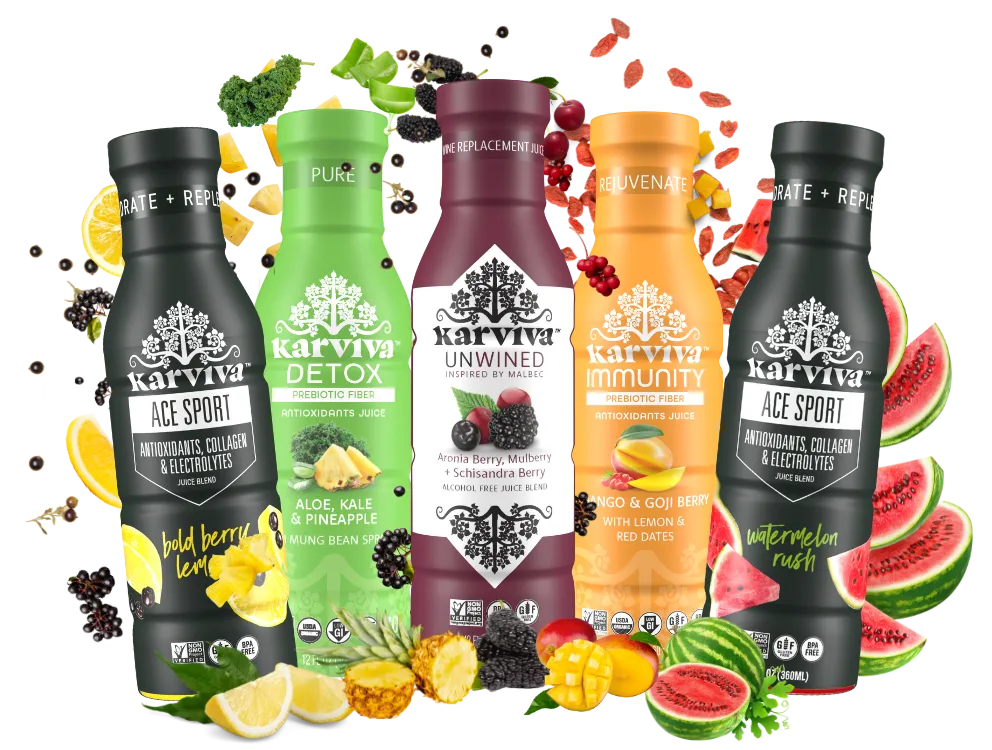
This is exactly the question that led me to create a different kind of beverage approach at Karviva.
Why I Developed a Lower-Sugar, Herb-Forward Approach at Karviva
I kept asking: how can we deliver the plant compounds, antioxidants, and hormone-supportive nutrients women need during menopause—without the 30–50 grams of sugar you see in many fruit-heavy juices and smoothies?
The result was a line of whole-plant, low-sugar, herb-forward drinks designed with menopausal metabolism in mind:
- Herb-forward instead of fruit-forward
- Typically around 5–8 grams of sugar per serving, with no refined sugar or artificial sweeteners
- Whole-plant and fiber-rich where possible to support digestion and blood sugar
- Built around TCM-inspired herbs and functional ingredients to support mood, energy, and hormone-related symptoms
The goal: give women the benefits of plants—polyphenols, antioxidants, adaptogens—without pushing blood sugar, insulin, and cortisol even higher.
This is part of what we explore more deeply in Part 2 of this series.
Practical First Step: Audit Your Fruit During Menopause
If you’re dealing with:
- Hot flashes or night sweats
- Brain fog or “menopause brain”
- Stubborn belly weight that won’t budge
- Energy crashes or mid-afternoon slumps
- Mood swings or irritability
- Poor sleep
Try this simple experiment:
- Track your fruit intake for 3 days. Count everything:
- Fresh fruit
- Smoothies
- Fruit juice (even cold-pressed)
- Dried fruit
- Fruit in yogurt, salads, and “healthy” desserts
- Notice how you feel 1–3 hours after higher-fruit meals or snacks:
- Do you get sleepy or wired, then tired?
- Do you feel hungrier or more snacky?
- Do hot flashes or night sweats seem worse?
- Do you notice more bloating or puffiness?
Your body will give you very specific feedback about how much fruit—and in what form—it can comfortably handle at this stage.
For many women, that ends up being:
- Smaller servings of fruit
- More focus on lower-sugar fruits (berries, kiwi, citrus segments)
- Pairing fruit with protein, healthy fats, or fiber
- Swapping some fruit-based drinks for herb-forward, low-sugar options
Coming Next: How Karviva Supports Hormone Harmony
In Part 2 of this series—“How Karviva Supports Hormone Harmony (The Adaptogenic Approach to Menopausal Wellness)”—I’ll walk you through:
- The specific adaptogenic herbs we use in our menopause support drinks
- How they support stress, mood, sleep, and hot flashes from both a TCM and modern science perspective
- Why a herb-forward, low-sugar, whole-plant approach is fundamentally different from typical fruit-heavy beverages
- How to use strategic nutrition to help your body find its new hormonal balance
After more than 30 years studying Traditional Chinese Medicine and working with women through hormonal transitions, I can tell you this with confidence:
Your hormones don’t need another sugary “healthy” smoothie. They need strategic, thoughtful support.