




It’s the most reasonable-sounding habit in wellness. You don’t want to take a sleeping pill. You’d rather not lie awake for an hour. So you have a glass of wine, you feel yourself soften, and you go to bed. It works – you fall asleep.
Then you wake at 3am, or you wake at seven having technically slept eight hours and feel like you slept four.
There’s a metaphor I heard from a TCM physician that captures this better than anything in a textbook: you powered the machine off, but you forgot to plug it in. The screen went dark. The battery never charged.
In the first article in this series, I made the case that energy has to be spent before it can be restored – that the discharge and the recharge are two halves of one cycle. This is the other half of that argument. You can do everything right during the day and still wake up empty, because the recharge itself can be interrupted. Alcohol is the most common way it happens, and the most misunderstood.
What a Nightcap Actually Does
A 2025 systematic review in Sleep Medicine Reviews pooled 27 studies on alcohol and sleep, and the findings are worth sitting with, because they invert the usual assumption.
The damage starts at one to two drinks. Disruption to REM sleep — delayed onset, reduced duration – showed up at doses as low as roughly two standard drinks, and got progressively worse from there.
The benefit doesn’t start until five. Here’s the part almost nobody knows: alcohol only measurably shortened the time it took to fall asleep at high doses, around five standard drinks or more. And at that dose, the REM disruption is far worse.
Read those two findings together and the nightcap logic collapses. At one or two glasses, you’re getting the cost without the benefit the research can actually detect. Whatever helps you drift off at that dose is largely the ritual – the pause, the warmth, the signal that the day is over. Which is worth knowing, because the ritual is the part you can keep.
REM isn’t a luxury stage, either. It’s when the brain consolidates memory and does much of its emotional processing. Losing it is a large part of why a poor night leaves you not just tired but thin-skinned — quicker to snap, slower to cope.
The Night Your Heart Never Clocked Out
The clearest picture of the “off but not charging” problem comes from a 2025 smartwatch study that tracked 40 healthy adults across nine days – three alcohol-free nights, three nights with moderate drinking, three nights after.
On the drinking nights, resting heart rate during sleep rose significantly and stayed elevated all night. It came back down once the drinking stopped.
But here’s the finding that makes the whole point: objective sleep architecture barely changed. If you’d only looked at the sleep stages, those nights would have looked fine. What changed was the body’s state underneath – the heart working harder through the hours meant for recovery – and how people felt when they woke up, which was worse.
That’s the gap between sleeping and recovering. You were unconscious for eight hours. Your body spent those hours metabolizing alcohol instead of repairing you.
The Hours When the Body Does Its Quiet Work
Traditional Chinese Medicine mapped this territory long before anyone could measure heart rate at 2am. In the organ clock, the hours from 11pm to 3am belong to the gallbladder and then the liver – the deepest part of the night, when the system is meant to be storing blood, clearing, and renewing.
I want to be careful here: the TCM “liver” is a functional system, not simply the anatomical organ, and I’m not claiming the ancient physicians were describing alcohol metabolism. But the resonance is hard to ignore. The window TCM identified as the body’s deepest restorative work is precisely the window a nightcap conscripts for something else. And waking at 3am – the single most common complaint I hear – sits exactly at the handoff.
If you drink in the evening and wake in that window with your mind switched on, you’re not failing at sleep. You’re feeling the second half of the night, when the sedative effect has worn off and what’s left is a stimulated, fragmented system.
Why This Is Different for Women
Two glasses of wine are not the same event in two different bodies.
Women generally have a lower proportion of body water to dilute alcohol, which produces a higher blood alcohol concentration from the same drink even after adjusting for body weight. Differences in the stomach enzyme that starts breaking alcohol down may add to this, though that piece is still debated. Either way, it’s a physiological difference – not a matter of tolerance or willpower.
Layer perimenopause on top and the picture compounds. Sleep is already more fragile; night waking is already more common. Alcohol’s effect on hot flashes specifically is genuinely mixed in the research and seems to vary by stage of the transition, so I won’t overstate it. But the sleep disruption is consistent, and it lands on a system that has less margin than it used to.
If you’re in this stage and have quietly noticed that a glass of wine costs you more than it did at forty, you’re not imagining it.
Beyond the Nightcap: Healthy Sleep Rituals by Karviva Beverages
I’m not going to tell you never to drink. Wine at dinner with people you love is one of the good things about being alive, and a brand that pretends otherwise isn’t being honest with you.
What the evidence supports is changing when, not necessarily whether:
- Move it earlier. The aperitif is kinder than the nightcap. The body clears roughly one standard drink per hour, so finishing three to four hours before bed lets you get most of it behind you before the restorative hours begin.
- Separate the ritual from the alcohol. If the wind-down is what’s actually helping you sleep, keep the wind-down. A warm drink, dimmed lights, and the same sequence every night will do more for sleep onset over time than a depressant will.
- Eat earlier and lighter too. A heavy late meal competes for the same overnight window – stopping at about 70% full applies double at dinner.
- Notice the pattern before you judge it. If you use wearables, compare your resting heart rate on nights you drink and nights you don’t. The number is usually more persuasive than any article.
- Treat persistent insomnia as its own problem. If you’re drinking to sleep most nights, the drinking has become the sleep strategy – and that’s worth raising with a doctor rather than solving alone.
Where Karviva Fits In
The evening ritual is the thing worth protecting, and it doesn’t need alcohol to work.
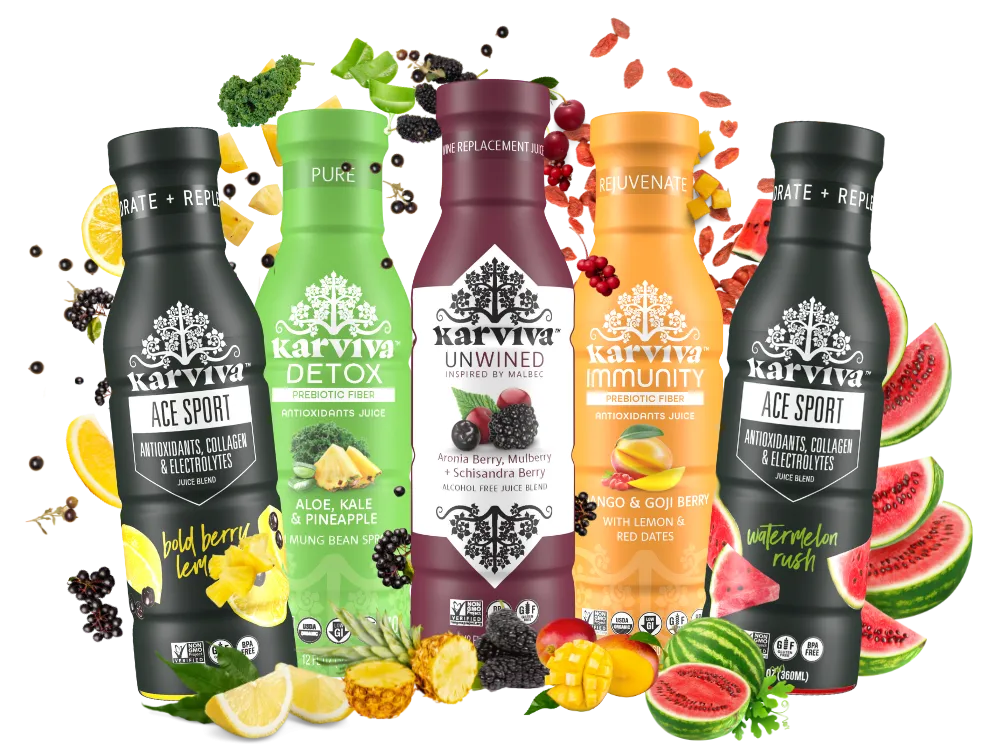
That’s part of why we built the Karviva Wellness Reset the way we did. It’s a whole-plant blend with 5–8 grams of naturally occurring sugar per serving and no added sugar – enough to feel like something, without the sugar load that sets off its own overnight blood sugar swings.
The herbs matter here too. Schisandra and goji berry have been used in Chinese herbalism for centuries in exactly this context — supporting the liver system and the yin, restorative side of the cycle. Adaptogens like holy basil support the body’s stress response rather than sedating it. These are foods and beverages, not sleep medications, and I won’t claim otherwise. But as the thing you reach for at nine o’clock instead of the bottle, they support the recovery you were trying to buy in the first place.
Sleep isn’t the absence of consciousness. It’s the work your body does while you’re not watching. Give it the hours, and it does the rest.
Part 3 of this series looks at what wearable data can and can’t tell you about your own balance – and why an HRV reading has more in common with traditional pulse diagnosis than you’d expect.