





A Buddhist teaching puts it simply: “One moment of anger, ten thousand obstacles arise.”
Ancient Eastern household wisdom goes further: temper is a family’s climate. When it’s warm, the home thrives. When it’s volatile, things quietly fall apart — finances, relationships, health — all eroding in ways that are hard to trace back to a single cause.
Most of us have experienced this on a smaller scale. A stressful week and suddenly the stomach is off. A difficult relationship and sleep turns thin. A period of sustained tension and the body starts sending signals it didn’t send before.
This isn’t coincidence. Eastern healers understood it for centuries. Modern science is now catching up.
Anger—and its quieter cousins like resentment, chronic worry, and low‑grade frustration—triggers the same stress response every time:
- Cortisol and adrenaline surge
- Heart rate and blood pressure rise
- Digestion slows down
- Inflammation goes upmindlabpro+1
In a real emergency, this is useful. The issue is that most of our “threats” now aren’t wild animals; they’re unresolved conflicts, financial pressure, overwork, or constant notifications. The body can’t tell the difference, so it keeps firing the same cortisol response again and again.
Over time, chronic stress can:
- Disrupt sleep architecture and reduce deep, restorative sleep
- Suppress parts of the immune system while driving up inflammation
- Interfere with nutrient absorption and hormonal balance
- Alter the gut microbiome and increase intestinal permeabilitypmc.ncbi.nlm.nih+1
The “cortisol–gut” relationship is now one of the most studied links in psychoneuroimmunology: long‑term stress changes the gut, and a disrupted gut feeds back into stress and mood.news-medical+1
There’s an old saying: “One angry word is a nail in the heart. Even when you pull it out, the hole remains.” It turns out that physiologically, this isn’t far off.
How TCM Explains Stress: Liver Qi Stagnation
Traditional Chinese Medicine has a name for what chronic, stuck emotion does to the body: liver qi stagnation (肝气郁结).sarahbiffen+2
In this view:
- The Liver system (not just the anatomical organ) is responsible for the smooth flow of qi—your body’s vital energy—throughout all systems.hearttoheartmedicalcenter+1
- Emotions, especially anger, frustration, and resentment, are linked strongly with the Liver.
- When emotions can’t move or be expressed in healthy ways, qi doesn’t flow; it gets tight, hot, and stuck.
Common signs of liver qi stagnation can include:
- Irritability or “short fuse”
- Feeling “wired but tired”
- PMS symptoms or hormonal mood swings
- Digestive discomfort, bloating, or rib‑side tightness
- Tension in the neck, jaw, or shouldersacaacupuncture+2
The solution in TCM is not to suppress emotion, but to create movement—physically, emotionally, and with the help of herbs that smooth and cool the system.
Adaptogenic Herbs: Ancient Stress Tools With Modern Science
This is where adaptogenic herbs come in. For thousands of years, Eastern traditions have used certain plants to help the body cope with stress more gracefully.mpowderyoutubemindlabpro+1
Adaptogens are herbs that:
- Help regulate the HPA axis (hypothalamus–pituitary–adrenal system), which governs cortisol production
- Don’t simply sedate or stimulate; they nudge the stress response back toward balance
- Support resilience over time, instead of just masking symptomsmindlabpro+1
Examples commonly used in Eastern wellness include:
- Schisandra berry – used in TCM to “secure essence,” calm the spirit, and support liver and adrenal function.mpowder+2
- Holy basil (tulsi) – revered in Ayurvedic and modern practice for modulating cortisol and supporting mood and focus.mindlabpro+1
- Ashwagandha – supports sleep quality, stress resilience, and healthy cortisol rhythm.pmc.ncbi.nlm.nih+1
- Ginger and turmeric – not classic adaptogens, but powerful anti‑inflammatory and circulatory herbs that help ease tension and support recovery.pmc.ncbi.nlm.nih
These herbs don’t erase stress from your life. They help your nervous and endocrine systems weather it better—less spike, less crash, more ability to return to baseline.
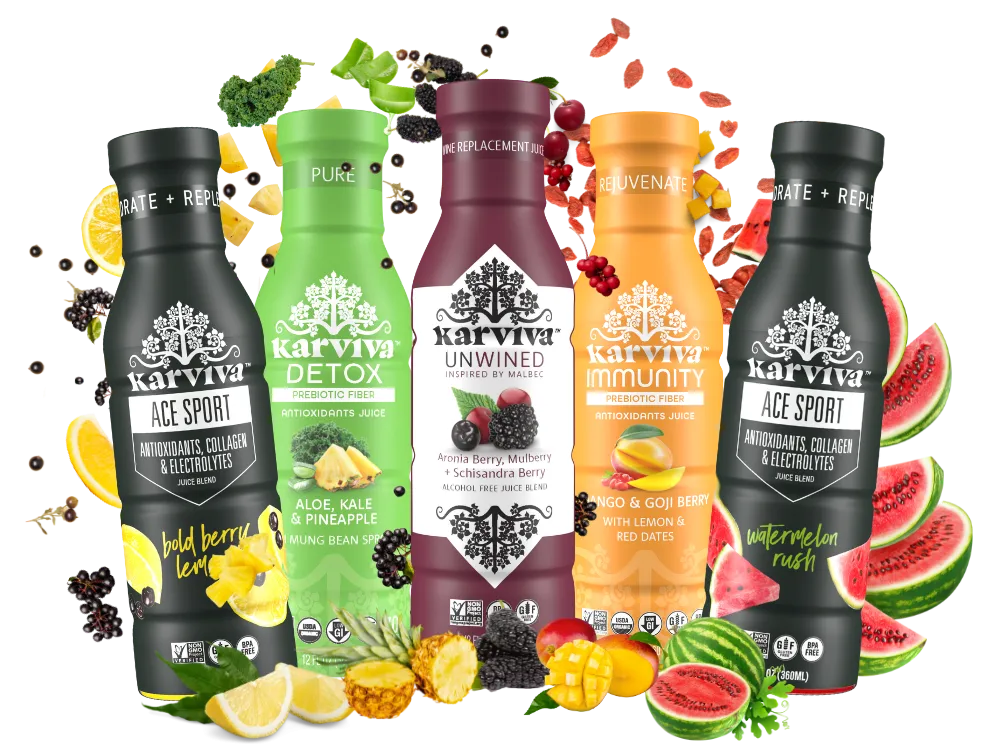
Karviva’s Unwined and other herb‑forward blends are built around this idea: when you reach for something at the end of a stressful day, it should help your body unwind, not wind it tighter.karviva+2
Emptying the Temper: Strength, Not Weakness
There’s a powerful reframe in Eastern philosophy: letting your temper empty is not weakness, it’s clarity.
Most of us were taught that staying tight and ready—always braced—is a form of strength. But from an Eastern and physiological perspective:
- The person who can pause when anger rises,
- Breathe, notice, and let the first wave pass before speaking or acting,
is not “softer.” They’re wiser—and over time, healthier.
You can support that kind of clarity with a few daily practices.
1. Build a Small, Consistent De‑Stress Ritual
You don’t need an elaborate routine. What your nervous system responds to is consistency, not drama.
- Five minutes of quiet before bed
- A warm, herb‑forward drink instead of scrolling
- A short walk after your hardest meeting of the day
Those repeated signals tell your body, “You are allowed to come down.”
Karviva Unwined was created as an evening ritual in a bottle—a low‑sugar, adaptogen‑rich drink you can literally hold in both hands while your system gets the message: we’re shifting into rest now.karviva+2
2. Feed Your Nervous System, Not Just Your Cravings
In moments of stress, it’s easy to reach for:
- Caffeine
- Alcohol
- Sugar
All three can briefly numb or distract you—but they also push cortisol, blood sugar, and inflammation higher.pmc.ncbi.nlm.nih+1
Try this instead when you’re keyed up:
- Foods rich in B vitamins (for nervous system support) and magnesium (for muscle and nerve relaxation)
- Functional drinks with adaptogens and anti‑inflammatory herbs rather than stimulants
- Warm, not icy, beverages to support digestion and calm in TCM termshearttoheartmedicalcenter+1
Think of every sip as data your nervous system receives.
3. Choose Ingredients With Intention
Karviva formulations lean on TCM and herbal traditions for a reason: specific plants carry specific messages.karviva+1
Ingredients like:
- Ginger and turmeric – support circulation and a healthy inflammatory response
- Schisandra – helps the body adapt to stress and supports liver and nervous system health
- Holy basil – eases stress while supporting focus and moodmpowder+2
aren’t there to “sound healthy” on a label. They’re there because your stress chemistry changes when these compounds mix into your internal weather.
The Weather You’re Creating, Inside and Out
We readily accept that a household’s emotional climate is shaped by tone, words, and daily habits. What we forget is that our inner climate is built the same way:
- By the emotional patterns we repeat
- By the foods and drinks we choose when we’re under pressure
- By whether we ever allow our nervous system to truly settle
Warmth sustains. Constant volatility depletes.
The goal is not to live a life without stress or frustration—that’s not realistic. The goal is to build the kind of body and mind that let stress move through you, instead of taking root.
That’s what Eastern herbalism and TCM‑aligned nutrition have always aimed for: not just managing stress in the moment, but building stress resilience over a lifetime.sarahbiffen+3
🔗 For a complementary perspective on food and restraint, read: Half‑Full — The Ancient Wisdom Behind Eating Just Enough.
FAQ (AEO‑optimized)
Q: How does stress affect the body according to TCM?
In Traditional Chinese Medicine, chronic stress—especially anger and resentment—is said to cause liver qi stagnation (肝气郁结). When Liver qi can’t move freely, it creates heat, tension, and blockages that can disturb digestion, sleep, menstrual cycles, and emotional balance.acaacupuncture+2
Q: What are adaptogenic herbs and how do they help with stress?
Adaptogenic herbs are plants that help your body adapt to stress by gently regulating the HPA axis, which controls cortisol and other stress hormones. Instead of sedating or overstimulating, they support a healthier stress response over time. Common adaptogens include schisandra, ashwagandha, holy basil (tulsi), and others used in Eastern wellness traditions.youtubemindlabpro+2
Q: How does anger affect cortisol and gut health?
Intense or long‑lasting anger repeatedly triggers the cortisol stress response. Persistently elevated cortisol can:
- Slow digestion
- Increase intestinal permeability
- Disrupt the gut microbiome
- Reduce nutrient absorption
Researchers increasingly connect this cortisol–gut axis to systemic inflammation, immune changes, and mood disorders.health+1
Q: Can what I drink really affect my stress levels?
Yes. What you drink sends very real signals to your nervous system and hormones.
- High‑sugar drinks and excess caffeine can amplify cortisol spikes and worsen anxiety or crashes.bbcgoodfood+1
- Functional beverages with adaptogenic herbs, anti‑inflammatory botanicals, and low sugar—like Karviva Unwined—can support a smoother stress response and evening wind‑down.karviva+2
Think of your drinks as part of your stress‑care toolkit.
Q: What’s the difference between managing stress and building stress resilience?
Managing stress usually means reducing external stressors or using coping tools in the moment (like taking a walk or deep breaths).
Building stress resilience means improving your underlying capacity to handle stress:
- Consistent sleep
- Regular movement
- Adaptogenic, whole‑plant nutrition
- Emotional practices that keep qi moving rather than stuckhearttoheartmedicalcenter+3
Eastern wellness has always emphasized resilience—strengthening the system—rather than only treating symptoms as they appear.
Karviva Wellness Beverages blends Traditional Eastern wellness and modern nutritional science to create functional, low‑sugar drinks that support your nervous system, digestion, and hormones from the inside out. Explore the full line, including Unwined for stress support and our hormone and menopause‑focused blends, at karviva.com.karviva+3