




There’s an old story about a merchant who built his business from nothing. His home was elegant, his family comfortable—yet above his desk hung just two characters: 半满. Half‑full.
A young carpenter working in the house finally asked him, “Why would a successful man choose a phrase that sounds…unfinished?”
The merchant smiled. “Desires need regular clearing,” he said. “Cut ties with what’s useless. Let go of what you don’t need. Greed, left unchecked, ruins everything.”
Half‑full wasn’t a reminder of lack. It was a reminder of enough. And it applies just as much to how we eat as to how we live.
七分饱: What TCM Says About How Much to Eat
Long before modern nutrition started talking about “portion control,” Traditional Chinese Medicine had a simple guideline: 七分饱—eat until you are about 70% full.hearttoheartmedicalcenter+1
Not starving. Not stuffed. Just comfortably satisfied.
From a TCM perspective, when you stop around 70%:
- Your digestive system has space to do its job.
- Qi (vital energy) can move smoothly instead of getting bogged down.
- Food can be broken down, absorbed, and moved along instead of sitting heavy.acaacupuncture+2
Fill yourself to 100% at every meal and everything backs up. In TCM language, qi stagnates. In everyday language, you feel heavy, foggy, and slow.
There’s a saying: “留三分饥才知饭香,贪饱则伤脾胃。”
Leave a little hunger and you truly taste your food; overfill yourself and you injure the very system meant to nourish you.
What Modern Science Adds to 七分饱
Modern biology gives us a few extra pieces of the puzzle:
- It takes roughly 20 minutes for your gut to send “I’m full” signals to your brain.bbcgoodfood+1
- Most overeating happens inside that 20‑minute window—we keep eating simply because the signal hasn’t arrived yet.
When we chronically eat past comfortable fullness, we also create a cascade:
- Blood sugar spikes, then crashes
- Insulin and cortisol stay higher than they need to be
- The gut microbiome gets stressed by constant overload
- Lymphatic and digestive flow slow downfoodandwine+3
Over time, this isn’t just about weight. It’s about:
- Daytime energy
- Mood and brain fog
- Immune resilience
- How well you actually absorb the nutrients you’re paying for in your food and drinksnews-medical+3
The goal here isn’t restriction. It’s strategic nourishment—giving your body what it can use, not more than it can handle.
How to Practice the Half‑Full Principle (Without Counting Anything)
Half‑full is less about rules and more about rhythm. A few practical ways to live it:
1. Slow Down Enough for Your Body to Speak
If your brain needs 20 minutes to catch up, give it that time.
- Put your fork or chopsticks down between bites.
- Eat at a table instead of in front of a laptop or phone.
- Pause halfway through your plate and ask, “Where am I—50% full? 70%?”
You’re not aiming for perfection. You’re just learning what 70% full actually feels like in your own body.
2. Lead With Fiber and Fluid
It’s much easier to stop at 70% when what you’re eating and drinking actually supports fullness.
- Soluble fiber slows digestion and helps level out blood sugar.
- Fluids from soups, teas, and whole‑plant beverages help your stomach stretch gently and send satiety signals sooner.pmc.ncbi.nlm.nih+1
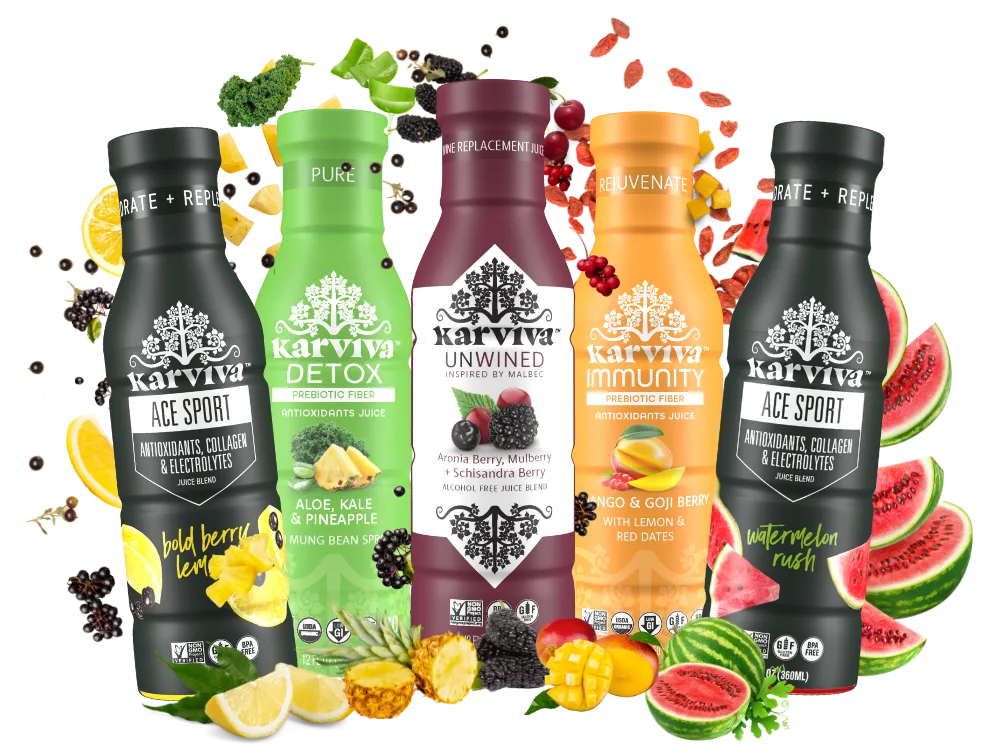
Karviva drinks were built on this idea:
- We blend instead of just juicing, so natural fiber from sprouts, beans, and botanicals stays in the bottle.karviva+2
- Each bottle delivers whole‑plant, fiber‑rich nourishment rather than a filtered shot of sugar water.
That makes it easier to feel satisfied without having to overfill yourself.
3. Give Your System a Reset Once in a While
Just like the merchant regularly cleared out excess, your digestion sometimes needs a reset from constant snacking and oversized meals.
A gentle 1–3 day juice cleanse built on fiber‑intact, low‑sugar, whole‑plant drinks can:
- Clear that “permanently full” feeling
- Reduce the inflammatory load from heavy, processed foods
- Help your natural hunger and fullness cues come back onlinehealth+4
The key is choosing a cleanse that keeps fiber and avoids huge sugar swings—exactly why Karviva’s Organic Juice Cleanse is blended with prebiotic‑rich sprouts and botanicals instead of being a fruit‑only, fiber‑free protocol.karviva+3
If you want a deeper dive into cleanses themselves, you can read our guide: What Exactly Is a Cleanse?
Full Isn’t the Same Thing as Nourished
We all know the feeling of being “stuffed” but still unsatisfied. That’s the difference between volume and nourishment.
Real nourishment:
- Leaves a little space in your stomach
- Leaves you with steady energy instead of a food coma
- Lets your body rest between meals instead of constantly firefighting excess
A life overstuffed with obligations, a body overfilled with empty calories, a mind crammed with noise—none of these feel truly full in the way that matters.
The merchant’s “half‑full” reminder, Eastern medicine’s 七分饱 principle, and emerging nutrition science are pointing at the same thing from different angles: enough is a sweet spot.
Half‑full, it turns out, is often exactly right.
🔗 Want to explore how stress fits into this picture? Read: Your Temper Is Your Body’s Weather — What Eastern Wisdom Knows About Stress, Cortisol, and Your Health.
FAQ
These answers are tuned for featured snippets / AI search and echo your target questions and internal links.
Q: What does TCM say about how much to eat?
Traditional Chinese Medicine recommends eating until you are about 70% full, a principle known as 七分饱 (qī fēn bǎo). Stopping at this level gives your digestive system room to process food, keeps qi flowing smoothly, and helps prevent the heaviness and stagnation that come from chronic overeating.thewellclinic+2
Q: What is 七分饱?
七分饱 literally means “70% full.” It’s an Eastern wellness guideline that encourages you to stop eating when you feel comfortably satisfied but not stuffed. Practiced regularly, it supports digestion, energy, and long‑term balance rather than short‑term fullness.hearttoheartmedicalcenter+1
Q: What is strategic nourishment?
Strategic nourishment means feeding your body intentionally, not reactively. Instead of focusing only on calories, it focuses on:
- Nutrient density
- Fiber
- Glycemic impact
- Consistent, balanced meals and beverages that your body can actually use
In practice, this can include whole‑plant, fiber‑rich drinks like Karviva, seasonal cleansing when appropriate, and portion sizes that land around 70% full rather than “as much as possible.”karviva+1
Q: How does fiber support the half‑full principle?
Soluble and prebiotic fiber:
- Slows digestion, so energy from food is released more steadily
- Helps smooth out blood sugar spikes and crashes
- Supports earlier, more reliable satiety signals from your gut to your brainpmc.ncbi.nlm.nih+1
Whole‑plant beverages that retain natural fiber—like Karviva’s blended juices and sprout‑based drinks—help you feel satisfied on less, which makes 七分饱 much easier than when you’re drinking filtered, fiber‑free juice.karviva+2
Q: What is a juice cleanse good for?
A short, thoughtful juice cleanse (often 1–3 days) can:
- Give your digestive system a break from heavy or processed foods
- Reduce overall inflammatory load
- Help reset overstimulated hunger cues and taste budsnews.northwestern+4
The important part is choosing a low‑sugar, fiber‑intact cleanse that supports your gut microbiome rather than stripping out fiber entirely. Karviva’s Organic Juice Cleanse is designed around that principle and pairs well with our other guides like What Exactly Is a Cleanse? and the 3‑Pillar Menopause Nutrition Cheat Sheet for women in hormonal transition.karviva+3
Q: How is Eastern wellness different from Western diet culture?
Eastern wellness traditions like TCM view food as information and energy for the body, not just numbers on a label. The focus is on:acaacupuncture+2
- How food affects qi, digestion, and organ systems
- Eating seasonally and mindfully
- Using herbs and whole foods to correct imbalance
- Practicing appropriate restraint—like 七分饱—rather than harsh restriction
Western diet culture, by contrast, often centers on calories, “good vs bad” foods, and short‑term weight outcomes. Eastern approaches aim for long‑term balance, resilience, and a calmer relationship with eating.