Your Science-Backed Guide to Supporting Metabolism Through Menopause
Understanding Your Changing Metabolism
If you feel like your body is changing in ways you can’t control, you’re not imagining it. Here’s what’s happening during menopause:
- Your metabolism slows down by about 10–15%
- Fat tends to shift from your hips to your belly
- Muscle mass starts to decrease faster
- Insulin sensitivity drops, making blood sugar harder to manage
- Bone loss speeds up (2–3% per year)
What does all this mean? Your body needs a new kind of nutritional support. This isn’t failure—it’s biology. The best results come from working with these changes, not against them.
Pillar 1: Calcium
Not Just for Bones—For Fat Metabolism, Too
Daily Target: 1,000–1,200 mg
During menopause, calcium does more than just protect your bones:
- It helps manage belly fat
- Supports healthy metabolism
- Aids sleep by calming the nervous system
- Keeps bones strong as estrogen declines
TCM Wisdom: In Traditional Chinese Medicine, calcium-rich foods are considered “kidney-nourishing.” They support both reproductive transitions and bone health.
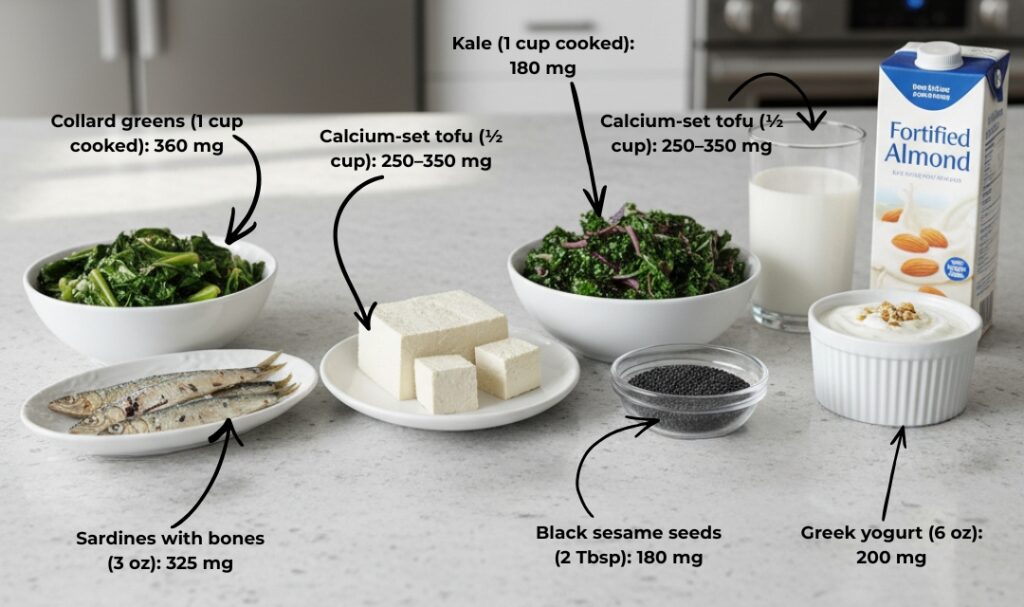
Top Food Sources:
Tips for Success:
- Start your day with dark leafy greens in your eggs
- Snack on tahini and veggies
- Choose calcium-set tofu
- Sprinkle sesame seeds on meals
- Enjoy bone broth soups
Timing:
- Spread calcium across the day (your body absorbs up to ~500 mg at a time)
- Try a calcium-rich breakfast to set your metabolic tone
- Evening calcium can help with sleep
Absolutely! Here’s a more human, warm, yet still professional rewrite of your 3-Pillar Menopause Nutrition Cheat Sheet. The language is clear, empathetic, and actionable, while keeping your science-backed authority and all the practical details.
The 3-Pillar Menopause Nutrition Cheat Sheet
Your Science-Backed Guide to Supporting Metabolism Through Menopause
By Angela Zeng, PhD, Founder of Karviva
Understanding Your Changing Metabolism
If you feel like your body is changing in ways you can’t control, you’re not imagining it. Here’s what’s happening during menopause:
- Your metabolism slows down by about 10–15%
- Fat tends to shift from your hips to your belly
- Muscle mass starts to decrease faster
- Insulin sensitivity drops, making blood sugar harder to manage
- Bone loss speeds up (2–3% per year)
What does all this mean? Your body needs a new kind of nutritional support. This isn’t failure—it’s biology. The best results come from working with these changes, not against them.
Pillar 1: Calcium
Not Just for Bones—For Fat Metabolism, Too
Daily Target: 1,000–1,200 mg
During menopause, calcium does more than just protect your bones:
- It helps manage belly fat
- Supports healthy metabolism
- Aids sleep by calming the nervous system
- Keeps bones strong as estrogen declines
TCM Wisdom: In Traditional Chinese Medicine, calcium-rich foods are considered “kidney-nourishing.” They support both reproductive transitions and bone health.
Top Food Sources:
- Collard greens (1 cup cooked): 360 mg
- Sardines with bones (3 oz): 325 mg
- Calcium-set tofu (½ cup): 250–350 mg
- Kale (1 cup cooked): 180 mg
- Black sesame seeds (2 Tbsp): 180 mg
- Fortified almond milk (1 cup): 300 mg
- Greek yogurt (6 oz): 200 mg
Tips for Success:
- Start your day with dark leafy greens in your eggs
- Snack on tahini and veggies
- Choose calcium-set tofu
- Sprinkle sesame seeds on meals
- Enjoy bone broth soups
Timing:
- Spread calcium across the day (your body absorbs up to ~500 mg at a time)
- Try a calcium-rich breakfast to set your metabolic tone
- Evening calcium can help with sleep
Pillar 2: Vitamin D
Your Metabolic Partner—Activates Fat Burning
Daily Target: 600–800 IU (sometimes more—get your levels tested)
Why it matters now:
- Vitamin D helps keep belly fat in check
- Boosts insulin sensitivity
- Strengthens muscles and balance
- Increases calcium absorption
- Lowers inflammation
TCM Wisdom: Vitamin D is “yang energy”—warming and activating for your metabolism and vitality.
Top Food Sources:
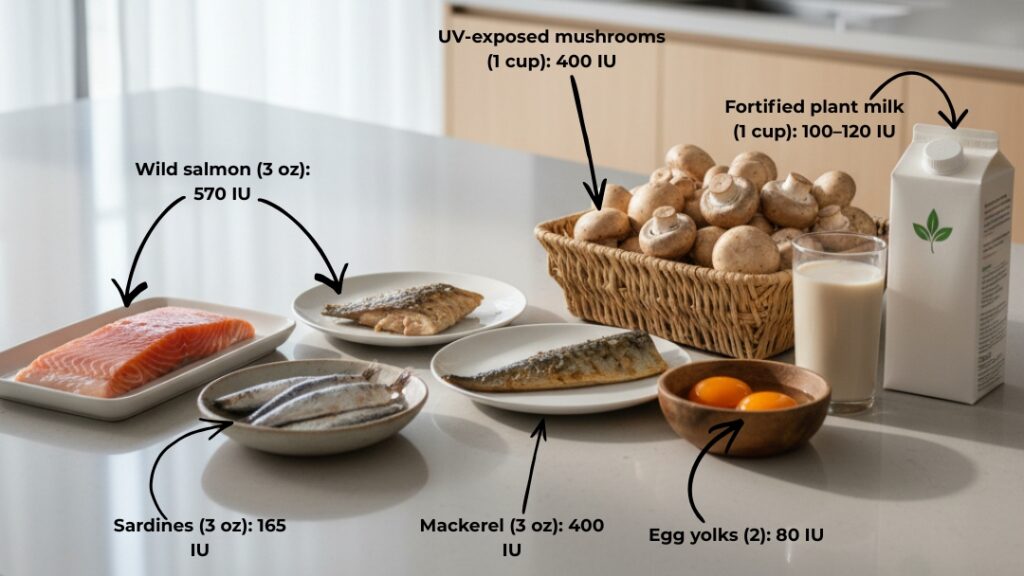
- Choose vitamin D3 (cholecalciferol)
- Take with a meal containing healthy fat
- Test your blood levels yearly (optimal: 40–60 ng/mL)
- Most women need 1,000–2,000 IU in supplement form to reach optimal levels
Pillar 3: Vegetables Over Fruit
The Ratio That Changes Everything
Daily Target: 5–7 servings of vegetables, max 2 servings of fruit
Why this matters:
- Vegetables have a lower sugar impact (important as insulin sensitivity changes)
- They’re packed with nutrients and fiber
- Offer a broader range of antioxidants and phytonutrients
- Support gut health and microbiome diversity
TCM Wisdom: Cooked vegetables are “blood-building” and “yin-nourishing”—they replenish the qualities that often get depleted in menopause.
The “3 Before 2” Formula:
- Eat 3 servings of vegetables before you count any fruit.
- Most days, you’ll naturally stop at 2 fruits, which is perfect.
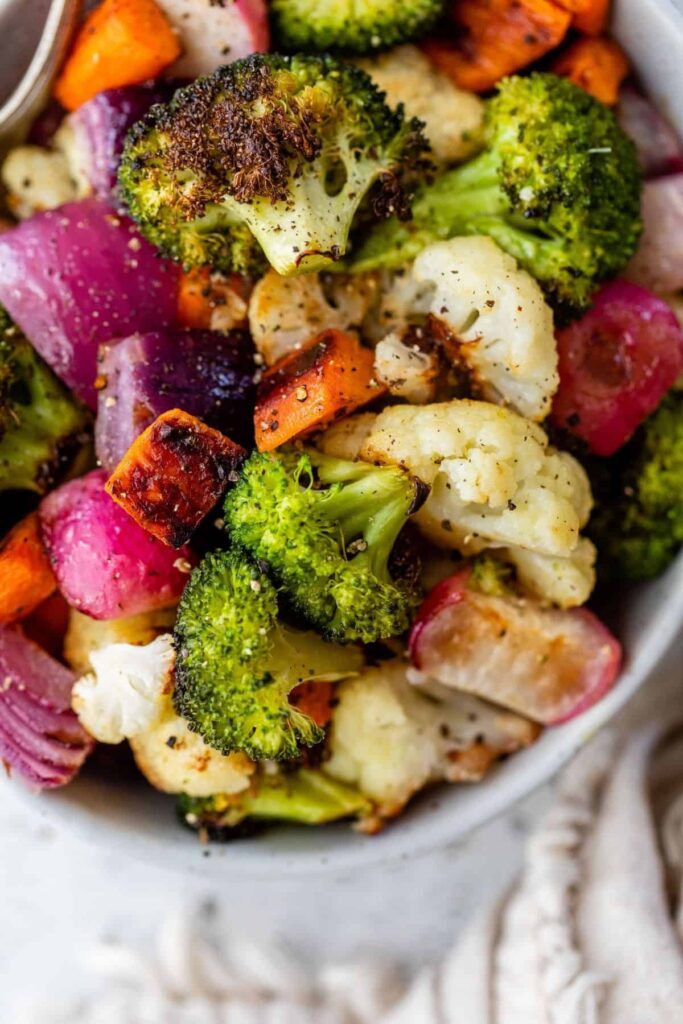
Aim for Color:
- Eat from at least four color groups every day:
- Green (spinach, kale, broccoli)
- Orange/Yellow (carrots, peppers, squash)
- Red/Purple (beets, red cabbage, tomatoes)
- White/Tan (mushrooms, onions, cauliflower)
Fruit Strategy:
- Best: Berries, green apples, citrus (daily OK)
- Moderate: Stone fruits, tropical fruits (2–3x/week, pair with protein/fat)
- Limit: Dried fruit, fruit juice, fruit-heavy smoothies
3-Ingredient Rule for Fruit:
Never eat fruit alone—always combine with protein, fat, or fiber to slow sugar absorption.
Your 7-Day Quick-Start Plan
Days 1–2: Calcium Baseline
- Track your calcium intake
- Add one calcium source to each meal
- Notice energy and sleep quality
Days 3–4: Vitamin D Assessment
- Note your sun habits
- Add one vitamin D-rich food daily
- Consider a supplement if needed
Days 5–7: Vegetable Challenge
- Add one extra serving of vegetables to each meal
- Try a new colorful veggie
- Track fruit servings (aim for 2 max)
The Menopause-Friendly Plate
- Half your plate: Non-starchy vegetables (2+ colors, cooked/raw)
- Quarter plate: Quality protein (fish, eggs, tofu, legumes)
- Quarter plate: Smart carbs (sweet potato, quinoa, brown rice—or more veggies)
- Add healthy fats (avocado, nuts, seeds, olive oil)
- Fruit is optional—preferably berries, always with protein/fat
Tracking & Troubleshooting
Weekly Check-Ins:
- Rate your energy, sleep, cravings, and mood
- Track average calcium, vitamin D, and veggie/fruit servings
- Note what’s working and what needs adjusting
Common Challenges:
- Not seeing results? Give it 2–4 weeks. Check portions, manage stress, and rule out medical issues.
- Always hungry? Increase protein, healthy fats, and veggie volume.
- Not a veggie fan? Start with favorites, try new prep methods, and use seasonings.
- Overwhelmed? Focus on one pillar at a time and use visual cues (“half my plate is veggies”).
Vegetarian/Vegan?
- Calcium: Focus on leafy greens, tofu, tahini, fortified plant milks
- Vitamin D: UV-exposed mushrooms, fortified foods, supplements
- Protein: Legumes, tofu, tempeh, seitan, nutritional yeast
Beyond Food: The Full Picture
- Sleep: Aim for 7–8 hours. Poor sleep affects metabolism and hunger hormones.
- Stress: High cortisol can block progress—find stress management practices that work for you.
- Movement: Strength training 2–3x/week, daily walks, and gentle stretching all support metabolism.
- Hydration: Drink plenty of water and herbal teas.
Final Reminders
- This isn’t about perfection—just progress.
- Prioritize veggies, calcium, and vitamin D most days.
- Be patient and kind to your changing body.
- Every woman goes through this—you’re not alone, and you’re not broken.
- With the right support, you can feel strong and energized in this next chapter.
Resources & Next Steps:
- Download this cheat sheet and keep it handy
- Read the full blog series for deeper dives
- Try Karviva functional beverages designed for menopause support
- Join our newsletter for ongoing, evidence-based tips
- Share this with a friend who’s on the same journey
- Work with your healthcare provider to personalize your plan