




Why Reducing Toxin Exposure Is the Most Underrated Detox Strategy
Before you invest in any cleanse, it’s worth asking: how much are you reducing what goes in?
Your liver, kidneys, gut, and lymphatic system all have limits. The lighter the daily input, the more capacity they have for the unavoidable exposures of modern life.
In Post 1 of this series, we covered what detoxification actually is—the body’s continuous, multi-organ process of neutralizing and clearing harmful compounds. We looked at how your liver, kidneys, gut, skin, and lungs are quietly doing this work around the clock, and how modern life puts that system under more pressure than it’s ever faced.
This post is the practical companion. Eight everyday swaps, roughly ranked by how much impact they have relative to how much effort they take.
Suggested image: side-by-side kitchen photo showing non-toxic swaps—glass containers, stainless steel cookware, water filter, beeswax wraps—clearly labeled. Alt text: “Low-toxin kitchen swaps including glass storage containers, stainless steel cookware, water filter, and beeswax wraps.”
What Do We Mean by “Everyday Toxins”?
Everyday toxins are low-dose, chronic chemical exposures from ordinary household and lifestyle sources: plastics, non-stick coatings, pesticide residues, tap water contaminants, processed food additives, synthetic fragrance, and combustion byproducts from cooking or candles.
Individually, most of these sit within regulatory “safe” limits. Cumulatively, across multiple sources, year after year, they create a steady workload for your detox organs. The science on long-term low-dose exposure is still building—but the practical takeaway is clear: reduce what you reasonably can.
The 8 Swaps, Ranked by Impact
1. Replace Non-Stick Cookware
Conventional non-stick pans are coated with PFAS—a family of synthetic compounds sometimes called “forever chemicals” because they don’t break down in the environment or in the body.
Research has linked PFAS to immune disruption, hormone interference, thyroid issues, and cellular damage. When non-stick pans are heated above medium-high (which happens in most cooking), they can release these compounds into food and air.
Swap for: stainless steel, enamel-coated cast iron, or well-seasoned cast iron. You cook just as well, your pans last for decades, and your liver isn’t quietly processing Teflon byproducts with every meal.
This one is a single purchase that pays off for years.
2. Filter Your Water
Tap water in most cities is treated to meet safety standards—but “safe to drink” and “clean” aren’t the same thing. Chlorine, fluoride, trace pharmaceuticals, microplastics, and low levels of heavy metals like lead and arsenic regularly show up in municipal water supplies.
Swap for: a countertop or under-sink water filter. Even a basic carbon block filter meaningfully reduces chlorine and many contaminants. This matters because hydration is one of your body’s main elimination routes—so the cleaner the water going in, the easier the work going out.
3. Get Plastics Out of Your Kitchen
Plastic is one of the trickiest modern exposures to avoid, partly because it’s everywhere. The main concerns are plasticizers and microplastics leaching into food and drink—especially when plastic is heated, scratched, or in contact with hot, acidic, or fatty foods.
Microplastics have now been detected in human blood, placenta, and lung tissue. We still don’t fully understand the long-term implications, but “reduce exposure” is a reasonable response while the science catches up.
Swap for:
- Glass or stainless steel water bottles (not plastic)
- Glass food storage containers in place of plastic tubs
- Beeswax wraps or silicone covers instead of clingfilm
- Never microwave food in plastic—not once
You don’t have to throw everything out at once. Just replace things as they wear out and prioritize anything that touches hot food.
4. Skip the Char on Grilled Food
Grilling itself isn’t the issue—it’s the black char that forms when meat (and sometimes vegetables) hits a very hot grill. That char contains heterocyclic amines (HCAs) and polycyclic aromatic hydrocarbons (PAHs), compounds that are genuinely tough on the liver and have been studied for their links to cellular damage.
Swap for:
- Scraping off visibly charred portions before eating
- Marinating meat in garlic, rosemary, or turmeric before grilling—research suggests these can reduce HCA formation
- Grilling at slightly lower temperatures and flipping more often to avoid heavy charring
- Pairing grilled food with cruciferous vegetables like broccoli, kale, or cabbage, which support the Phase 2 liver pathways that handle these compounds
5. Audit Your Skincare and Personal Care Products
What you put on your skin, you partially absorb—especially with products that sit on skin all day. Conventional synthetic fragrance, parabens, phthalates, and certain preservatives can act as endocrine disruptors, meaning they interfere with hormone signaling and add to the liver’s processing queue.
Women typically use more personal care products per day than men, which means this is often a larger hidden burden than people expect.
Swap for: products with shorter, more recognizable ingredient lists. The Environmental Working Group’s Skin Deep database is a free, reliable tool to check what you’re already using. Start with the products that stay on your skin all day: moisturizer, deodorant, sunscreen, and lip color.
6. Cut Down on Ultra-Processed Foods
Ultra-processed foods aren’t just “bad nutrition”—they’re a daily drip of synthetic additives, emulsifiers, preservatives, artificial dyes, and oxidized seed oils that your liver has to methodically break down. Each individual ingredient may technically be “within safe limits.” Cumulatively, across three meals and several snacks per day, they create a constant low-level workload.
Swap for: whole foods, most of the time. A useful test: if the ingredient list reads like a chemistry experiment, it’s adding to the burden. A practical goal—aim for 80% of what you eat to have five or fewer ingredients you actually recognize.
7. Improve Your Indoor Air
Most people assume outdoor air is the problem, but indoor air is often significantly more polluted. Common culprits include synthetic fragrance from plug-ins, paraffin candles, and air fresheners, VOCs from new furniture and paint, dust, mold, and combustion byproducts from gas stoves.
Swap for:
- Beeswax or 100% soy candles with cotton wicks instead of paraffin
- Houseplants like pothos, snake plant, or peace lily for passive air filtration
- A HEPA air purifier in your bedroom (you spend roughly a third of your life there)
- Opening windows daily, even briefly, to move stale air out
This is one of the cheapest, easiest upgrades on this list—and one of the most overlooked.
8. Be Honest About Alcohol
Alcohol is, for most people, the single largest avoidable load on the liver. Every drink runs through the same Phase 1 cytochrome P450 enzymes that handle environmental toxins. When those enzymes are busy with alcohol, everything else in the queue—the PFAS, the food additives, the hormones waiting to be cleared—has to wait.
This isn’t a case for abstinence unless that’s right for you. It’s a case for awareness.
Swap for: reduced frequency, lower-sugar choices when you do drink, and consistent hydration alongside alcohol. During an active Wellness Reset, taking alcohol off the table completely gives your liver room to focus on everything else.
Where to Start: A Simple Priority Guide
| Swap | Effort | One-Time or Ongoing | Impact |
|---|---|---|---|
| Filter your water | Low | One-time setup | Very high |
| Replace non-stick cookware | Medium | One-time | Very high |
| Glass for kitchen storage | Low–medium | One-time | High |
| Skip the char on grilled food | Low | Ongoing habit | Medium–high |
| Audit skincare and personal care | Medium | Ongoing | Medium–high |
| Cut ultra-processed foods | Medium | Ongoing | Very high |
| Improve indoor air | Low–medium | One-time + habit | Medium |
| Reduce alcohol | Low effort, high willpower | Ongoing | Very high |
If you want the biggest reduction in daily toxic input for the smallest upfront effort: start with a water filter and stainless steel bottles. Those two changes can make a meaningful difference within a week, with no ongoing effort.
What This Actually Looks Like Day-to-Day
Please don’t try to do all eight at once. You’ll get overwhelmed, change nothing, and feel guilty—which isn’t the point.
Pick one swap this week. Make it feel normal. Add another next month. Over a year, you will have genuinely transformed the daily input your liver processes—without a single dramatic cleanse.
The Karviva philosophy is strategic nourishment, not deprivation. That applies just as much to how you set up your kitchen and home as to what you eat and drink. Every swap on this list gives your liver, kidneys, and gut a little more breathing room—more capacity for repair, balance, and actual renewal.
How This Fits Into the Bigger Detox Picture
Reducing your toxic load is the foundation. But even with every swap in place, your body still encounters internal metabolic byproducts, hormones waiting to be cleared, and environmental exposures beyond your control. That’s where active support comes in.
And that support has to be done correctly. In Post 3, we’ll cover why the body stores toxins in fat cells for protection, why aggressive rapid-weight-loss cleanses can make things worse, and why “slow and steady” isn’t just a wellness cliché—it’s a genuine biological principle.
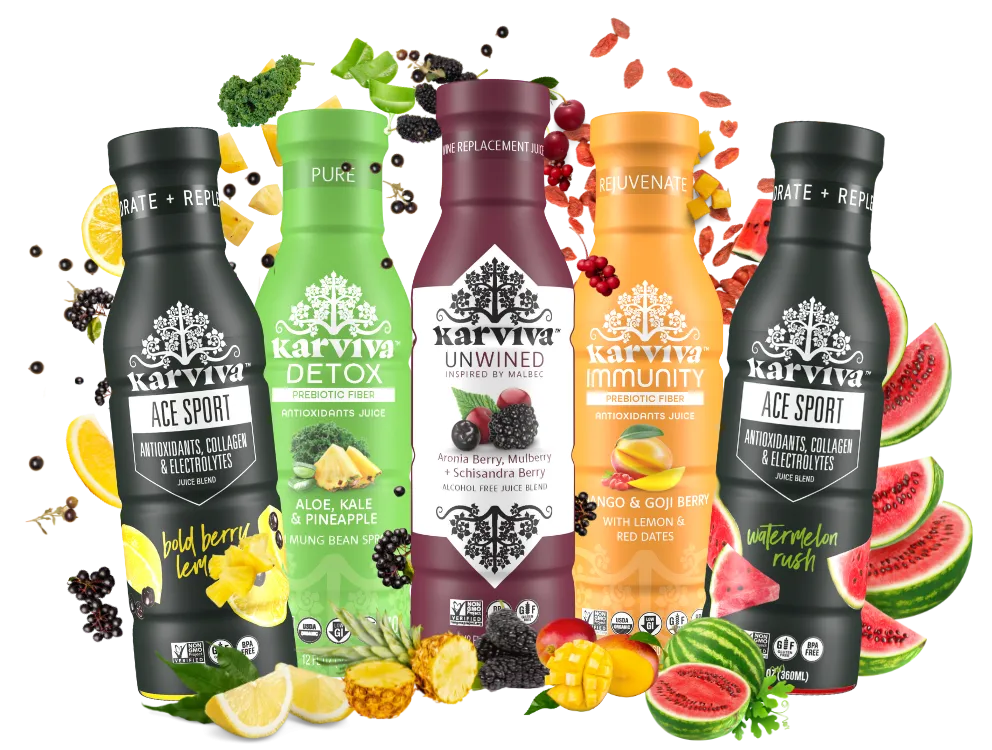
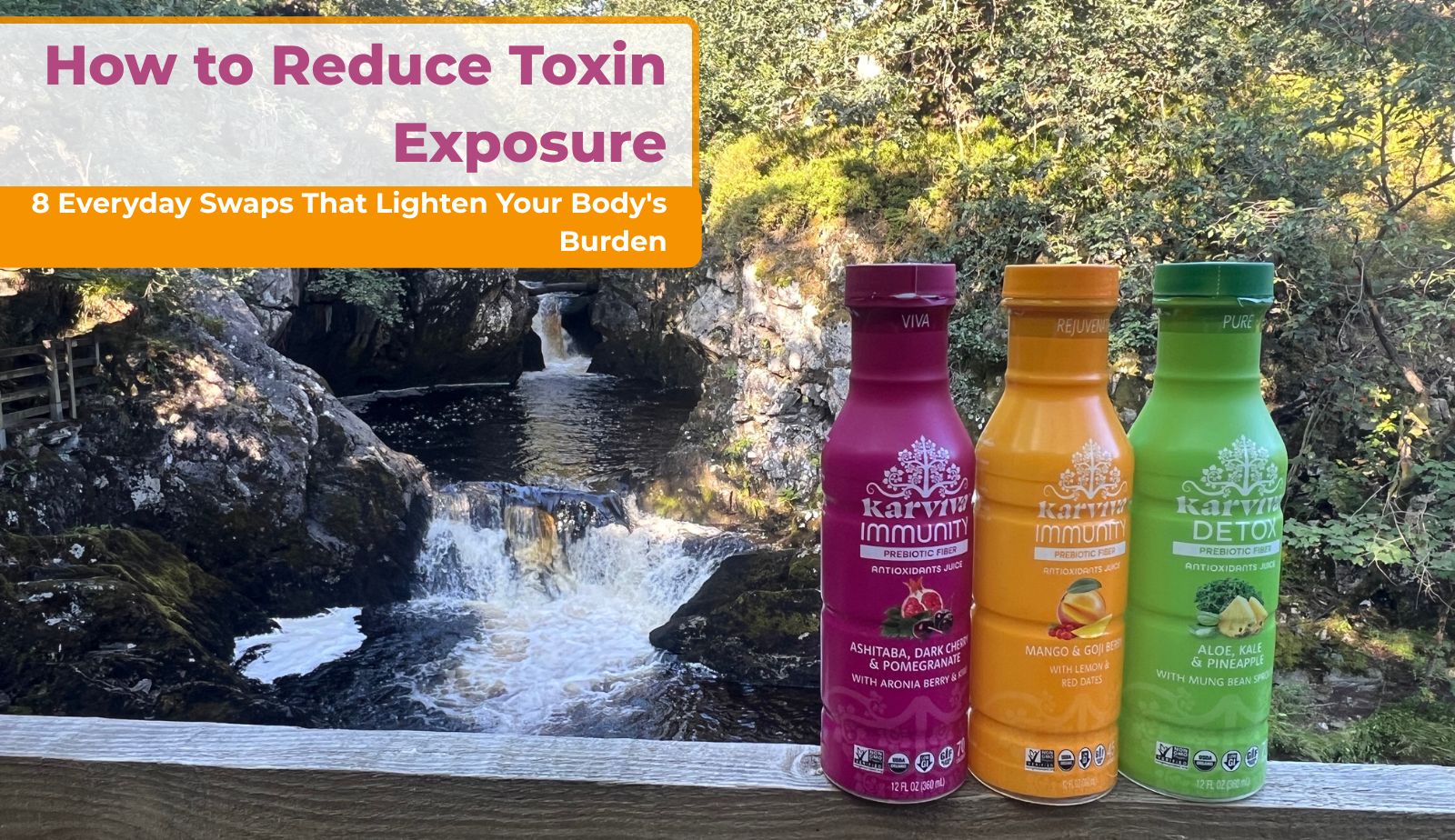
Suggested image: a calming shot of a Karviva blend alongside whole vegetables and TCM herbs. Alt text: “Karviva blended Wellness Reset with whole vegetables and TCM herbs, illustrating daily detox support.”
Frequently Asked Questions
What are the most common everyday toxins?
The most common sources of everyday toxin exposure are: non-stick cookware coatings (PFAS), unfiltered tap water (chlorine, microplastics, trace heavy metals), kitchen plastics, ultra-processed foods and their additives, conventional skincare and synthetic fragrance, and indoor air pollutants including paraffin candles and VOCs.
How do I detox my body from environmental toxins?
You don’t need to force or trigger detoxification—your liver, kidneys, gut, skin, and lungs do it continuously. The most effective strategy is:
- Reduce daily exposure with the swaps above
- Support the liver with cruciferous vegetables, sulfur-rich foods, and adequate protein
- Keep elimination moving with fiber and hydration
Post 1 of this series covers the full mechanism if you want to go deeper.
Are non-stick pans really dangerous?
PFAS-coated non-stick pans have been linked to immune disruption, hormone interference, thyroid effects, and cellular damage—and the risk increases when pans are overheated or scratched. Stainless steel, enamel-coated cast iron, and well-seasoned cast iron are well-researched, lower-toxin alternatives.
Is bottled water safer than tap water?
Not necessarily. Recent research has detected hundreds of thousands of microplastic particles per liter in some bottled water samples. A quality home water filter combined with a glass or stainless steel bottle is generally both cleaner and significantly cheaper than buying bottled water long-term.
How can I reduce plastic exposure at home?
The highest-leverage changes are:
- Glass or stainless steel water bottles
- Glass food storage containers
- Beeswax wraps or silicone covers instead of clingfilm
- Never microwave food in plastic
- Avoid plastic that touches hot, acidic, or fatty foods
What are PFAS and why do they matter?
PFAS (per- and polyfluoroalkyl substances) are synthetic “forever chemicals” used in non-stick cookware, water-resistant fabrics, food packaging, and many other products. They don’t break down in the environment or in the body, and research links chronic PFAS exposure to immune disruption, hormone interference, thyroid issues, and cellular damage.
Can you detox from microplastics?
There’s currently no proven protocol that removes microplastics directly from the body. The most evidence-based approach is to reduce ongoing exposure (switch to glass and stainless steel, filter your water) and support the body’s natural elimination pathways with fiber, hydration, and a healthy gut microbiome.
What foods help eliminate toxins naturally?
The most well-researched detox-supporting foods include cruciferous vegetables (broccoli, kale, cabbage, Brussels sprouts), garlic, onions, beets, berries, citrus, green tea, and high-fiber whole plants. TCM herbs like schisandra, goji berry, ashitaba, and holy basil have been used for centuries to support liver function and resilience.
About the Author
Angela Zeng, PhD, MBA, is the founder and CEO of Karviva and a TEDx speaker. She holds a PhD in pathology and has over 30 years of experience in herbalism, bridging Traditional Chinese Medicine with modern nutrition and microbiome science. She created Karviva to make detox science honest, accessible, and grounded in both ancient wisdom and peer-reviewed research.
Looking for Daily Detox Support That Fits Real Life?
The Karviva Wellness Reset is blended (not juiced) to keep fiber intact, low in sugar (5–8g per serving versus 30–50g in conventional juice cleanses), and formulated with TCM herbs like schisandra, goji berry, ashitaba, ginseng, and holy basil—designed to work with your body’s natural pathways, not overwhelm them.